The life and habitat of the Red Fox
Red foxes are cunning and agile creatures. They have a beautiful light to dark ginger coats, black legs and ears, and white on the belly and tail tip. You can find red foxes throughout the northern hemisphere. They like forests, rural and suburban areas, wetlands and brushy fields.
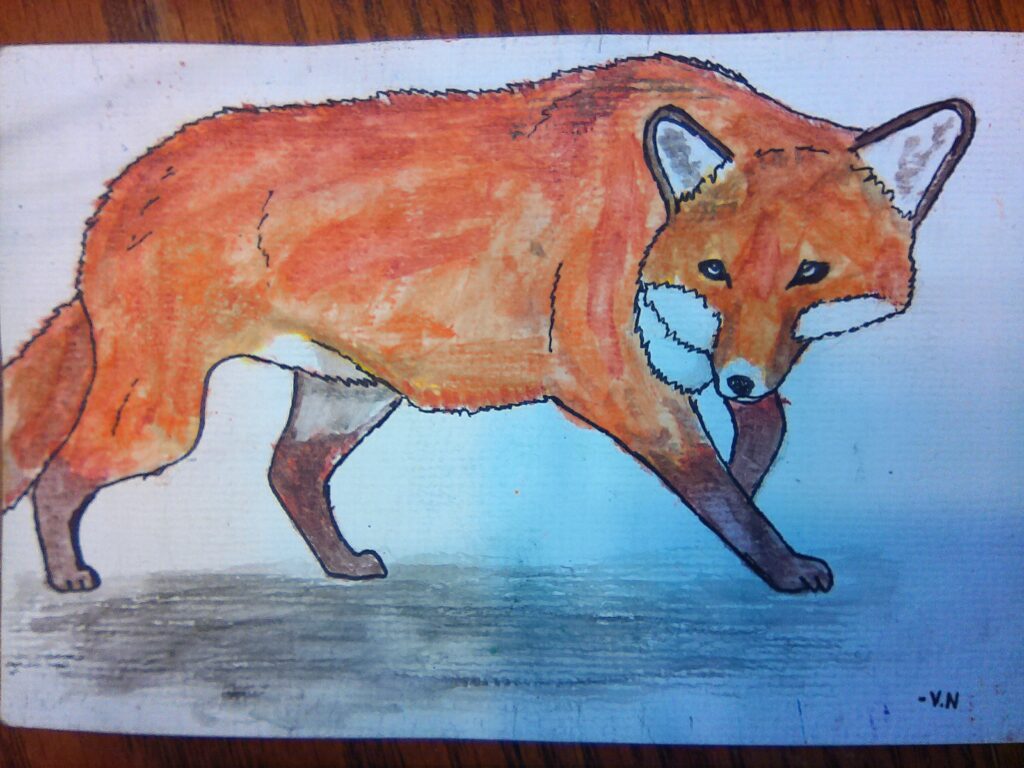
They like to live along the edge of forests and wetlands with lots of ground cover. Red foxes do not normally sleep in a den. They prefer to sleep out in the open with their tails wrapped over their nose for warmth. Since Red foxes are scavengers, they will approach homes, and steal out of trash cans.
The red fox will eat rodents, rabbits, birds, amphibians, and fruit. They are prey for coyotes, wolves, large hawks, and owls. The regular life span for a wild fox is about four to five years. When being followed, they are likely to double back on their tracks, get rid of their scent trail by going through water, or disguise there own scent with the scent of flowers.
Red foxes usually mate for life, and males do not take another mate if their own dies. The breeding season for the red fox is in January and February. Red Fox kits are born in March to April. The Male Red Fox will bring food to his mate while she is in the den with the kits, and a sister or daughter might help take care of the fox kits.
Red Foxes do not hibernate. They spend the fall alone, and eating as much food as they can, because in winter, there is much less food. On colder days in the winter, they will mostly lay in a sunny place during, and will only seek shelter in severe storms. When Spring comes back around, they lose their winter coats, and find their mates.
I Think foxes are amazing animals. They are smart, graceful, and beautiful. I love how they sneak up and pounce on their prey when they’re hunting. They can recognize people, and they don’t just assume all people are the same. I also love how their bushy tails wave up and down when they leap onto a fence or boulder.
Thank you for reading my third ever blog post. You can find the fox drawing on the Virginia Nelson Art store. For more articles on wild and domestic animals, go to virginianelsonart.com. Please comment on my post, I will enjoy what you think about it, and the information will help me create even better posts.