How to care for pastured chickens
We’ve been raising our pastured chickens for around five years. Getting rid of our older hens, then replacing them with young, brand new ones. We raise the chickens in chicken tractors, surrounded by Premier One fencing. Every once In a while, we move the tractor and fencing around the pasture, making the grass greener, and the cows happier.
Every other day, we walk out into the field, with a bag of feed, and the hose to feed and water the chickens. We have around forty-four chickens all together. Thirteen roosters and thirty-one hens (Most of them are named, so we can tell them apart) are all happy birds.
First, we collect the things we need: scrap food, feed, and hose. Then we collect the eggs, fill the food, brush the water containers, refill the water containers, dump the scrap food, and rinse out the scrap food bucket. We will give them any of our leftovers, bad parts on food, ect. We don’t give them orange peels, or sugary things, but almost anything else we give them.
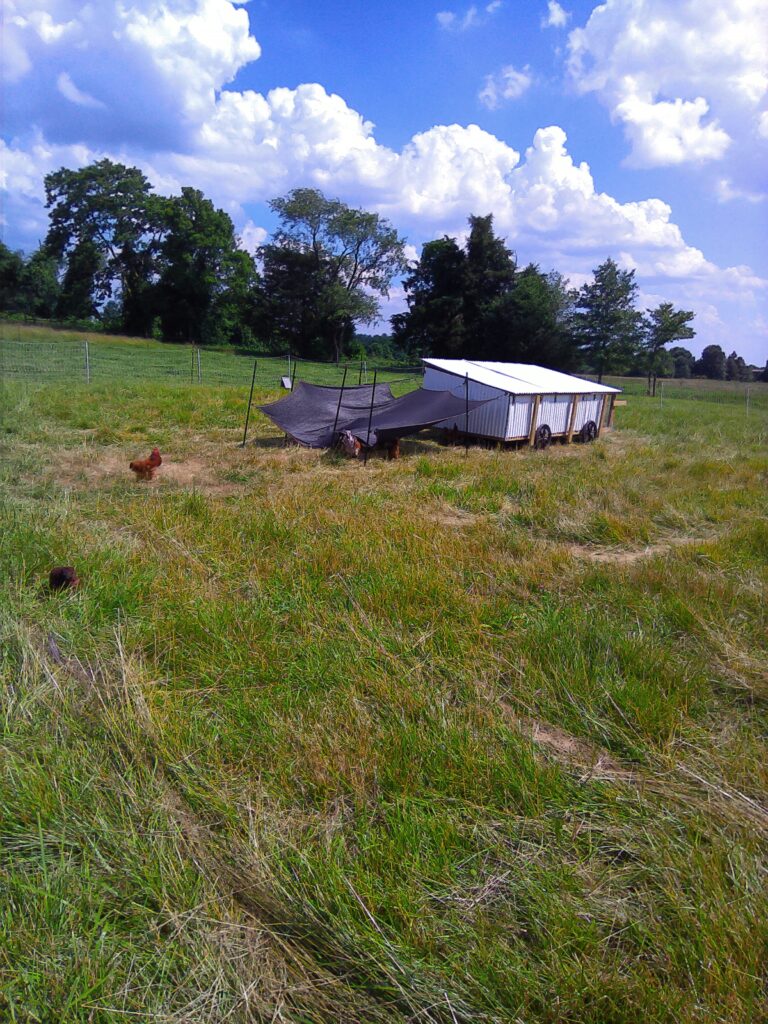
We raise layers, and meat birds. But both together, they can be a lot of work, but worth it. We do the layers every other day, but then we have to do the meat birds twice a day. Normally we butcher our meat chickens at about eight weeks. You can go to around ten weeks, but they get way too big for us at that time.
I love my birds. I like to give them dried meal worms every once in a while, and I get sad when we lose one, but I quickly get over it. For meat birds, it’s much easier to let go of them, because I understand I’m only going to have them for so long.
Meat chickens are always so curious and they are not afraid of you, especially if you have food. But the the layers, you need to treat them well, especially when they are chicks, and you’ll get nice, friendly hens and roosters.
There are many types of feed you can get for your birds. You can get some with antibiotics, you can get organic, and you can get corn and soy free feed. We normally get four bags of organic soy free layer feed. Every time we have one unopened bag of feed left, we get four more bags from a local feed store. The feed normally lasts about a month.
There are a lot of breeds of chickens to choose from. We have fifteen New Hampshires, five Wyandottes, eight Cochins bantams, six Ameraucanas, six silkies bantams, three Rhode Island Red bantams, and one Australorp.
We started out with the Australorps. They are great layers, and family friendly, just watch out for the roosters. They are not the nicest. None of our Wyandotte roosters have ever attacked us though, but I think it’s how they were raised that kept them docile.
The wyandottes stuck out from the flock, so we handled them more. If you handle the chickens just enough when they are chicks, there would be less of a chance of them attacking you when their adults. Just don’t handle them too much, or they’ll stay away from you altogether.
Thank you for reading! I hope you enjoyed the information I had for you. For more information on other domestic or wild animals, look at the Virginia Nelson Art blog, at virginianelsonart.com . Please leave a comment on what you thought about My writing, the information will be helpful!